Google Maps Ranking vs Organic Ranking: Why They're Different
The map pack and the organic links under it use different ranking systems. In 100 local searches, only 15% of map pack businesses also made the organic top 10.
ReplyOnTheFly Team
Content Team
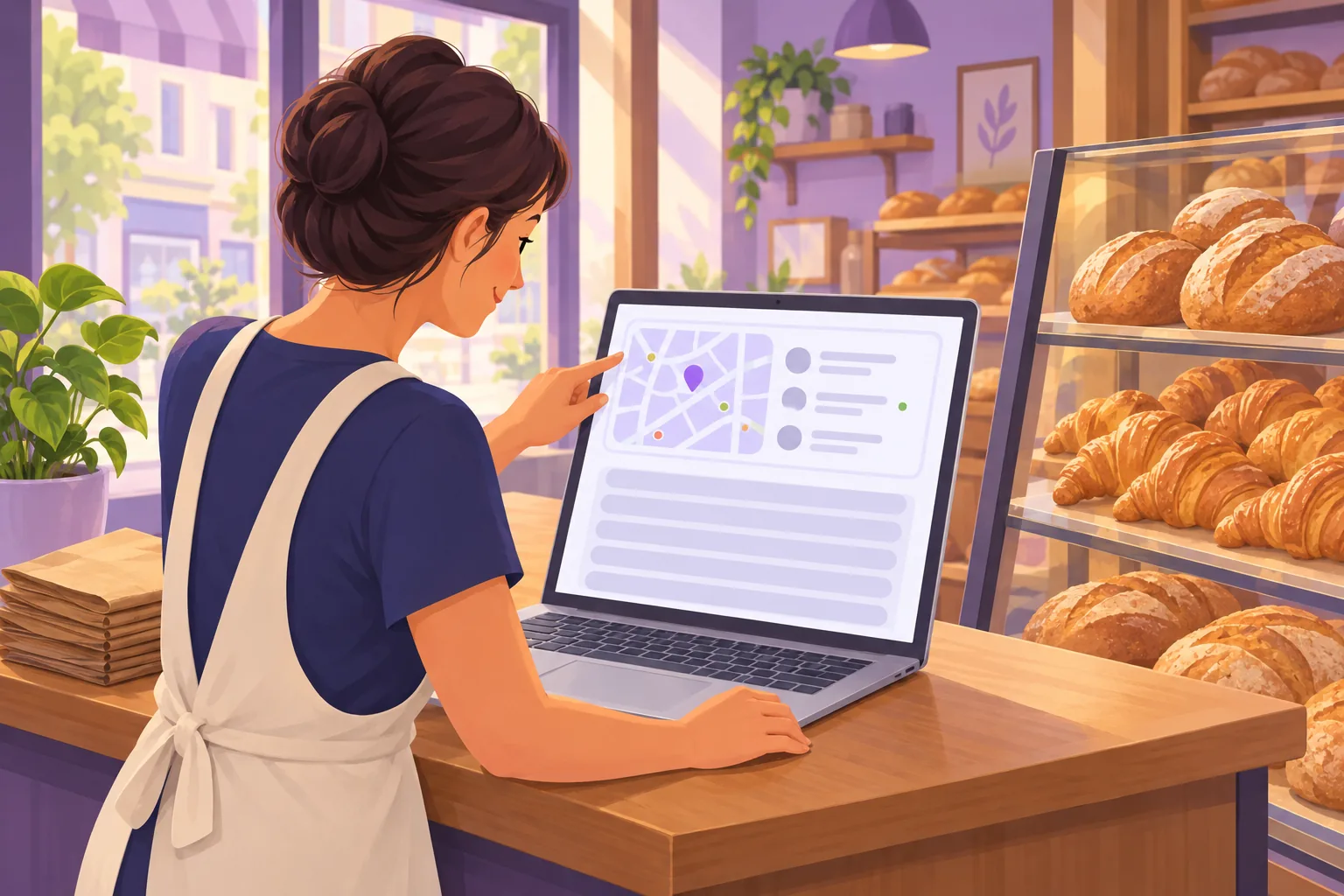
Search your own service and city, and you'll see two rankings on one page. The three businesses beside the map come first. The ten blue links come after. Most owners assume they're one list, and that being strong in one means being strong in the other.
They're not, and it doesn't. Google builds the map pack and the organic results with different systems, scores them on different signals, and, as we found when we checked 100 real searches, fills them with different businesses most of the time.
Quick answer
The map pack ranks your Google Business Profile on relevance, distance and prominence. The organic results rank your web pages on content, links and the usual search factors. In 100 US local searches we ran in October 2026, the pack sat at the top of the page in 95, but only 46 of the 302 businesses in those packs also appeared in the organic top 10. In 65 searches, not one pack business did. If you want both, you have to work on both.
Here's what each ranking is, what decides it, how rarely the same business wins both, and which one to fix first.
Map Pack vs Organic Results: Two Rankings on One Page
Google's own help page describes the first one: "When a customer searches for a business or place near their location, they'll find local results on Google Maps and Search." Those local results are the map pack: a map, three Business Profiles with ratings and hours, and a "More businesses" link. Local SEO people call it the local pack or the 3-pack. Same thing.
The second ranking is the organic results. Google explains that its search algorithms look at "the words of your query, relevance and usability of pages, expertise of sources, and your location and settings." Note the word pages. Organic results rank web pages. The map pack ranks profiles.
That distinction explains almost everything that follows. A Business Profile has a category, an address, reviews and hours. A web page has a title, text, links from other sites and a load time. Google scores each thing on what it has.
In our 100 searches, the map pack came first on the page 95 times. Four times it sat one organic result down, and once it sat four down. So for a search like "dentist Phoenix," the pack is what people see before they scroll, and the organic results are what they see if they keep going.
What Decides Each Ranking
Google names the local factors plainly: "Local results are mainly based on relevance, distance, and popularity." It calls the third one prominence and says it's "based on info like how many websites link to your business and how many reviews you have."
Distance is the big one, and it's the factor you can't optimize. Our guide to Google Maps proximity covers why the pack changes from one side of town to the other. Organic results use your location too, but as one signal among many rather than the one that sorts the list.
For a finer breakdown, the Whitespark 2026 Local Search Ranking Factors survey asked 47 local search experts to weight the signal groups separately for the map pack and for local organic results. Here's how the same groups score in each:
| Signal group (Whitespark 2026) | Map pack / Maps | Local organic |
|---|---|---|
| Google Business Profile signals | 32% | 7% |
| Review signals | 20% | 6% |
| On-page signals | 15% | 33% |
| Link signals | 8% | 24% |
| Behavioural signals | 9% | 10% |
| Citation signals | 6% | 7% |
| Personalization | 6% | 8% |
| Social signals | 4% | 5% |
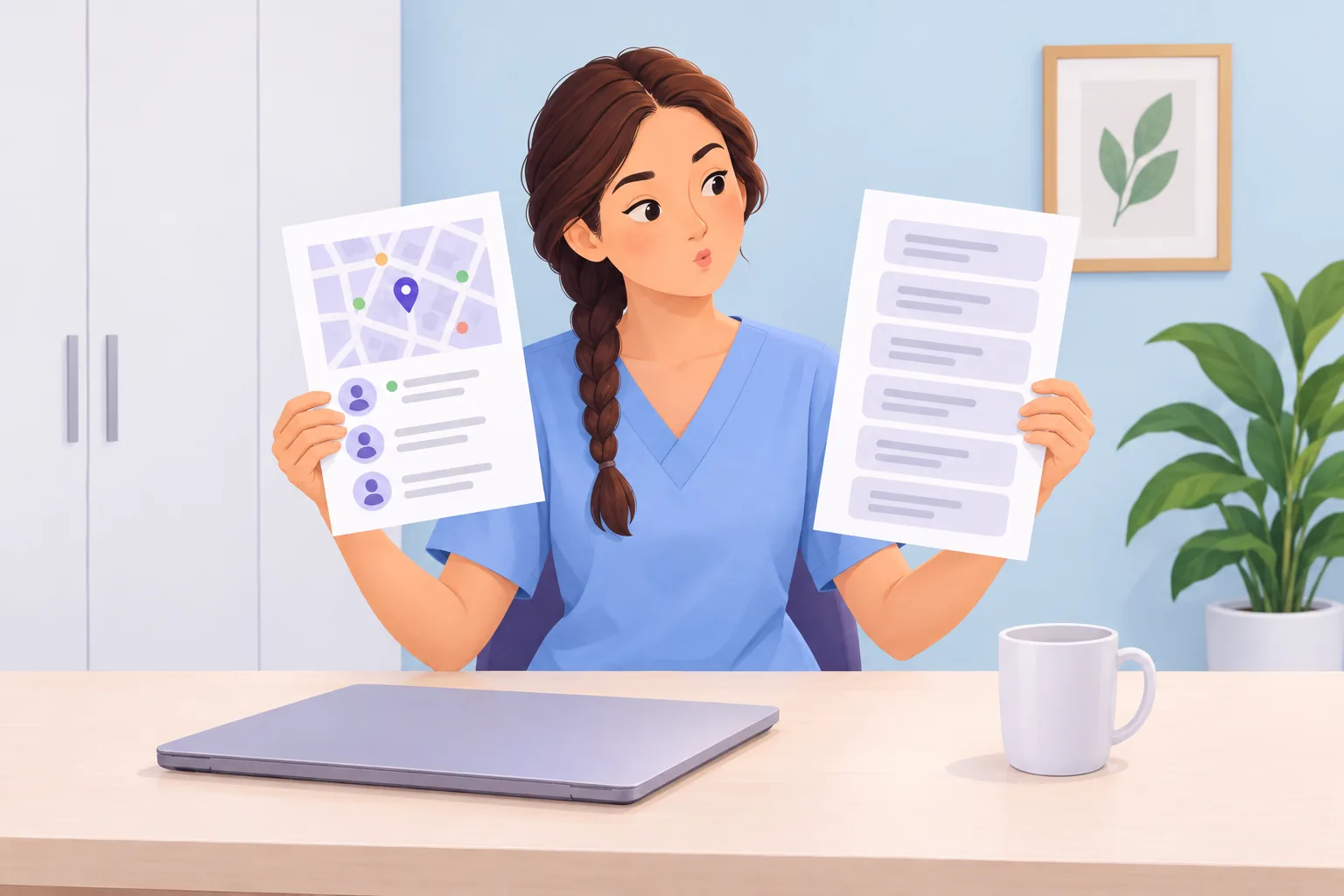
Read the two columns and the picture is clear. More than half of map pack weight comes from your profile and your reviews. More than half of local organic weight comes from your pages and your links. The profile barely registers in organic, and the website only modestly registers in the pack.
The individual factors tell the same story. Whitespark's top three for the map pack are your primary category, the proximity of your address to the searcher, and keywords in your business name. Its top three for local organic are a dedicated page for each service, geographic keyword relevance of your content, and the quality of links to your domain. Not one factor appears in both top threes.
One factor bridges them: the page your profile links to. Keywords in that landing page's title tag rank #4 for local organic and #17 for the map pack. It's the single place where website work pays into both lists, which is why it should never be a generic homepage that doesn't name your city.
The full list of what moves the map is in our guide to local SEO ranking factors. The point here is simpler: two scorecards, mostly different line items.
How Often the Same Business Wins Both
Experts' opinions are one thing. We wanted to see what Google actually shows, so on October 20, 2026 we pulled the full first page for 100 local searches: ten business types (plumber, dentist, pizza, hair salon, auto repair, roofing contractor, chiropractor, florist, personal injury lawyer and dog groomer) across ten US cities (Austin, Denver, Tampa, Columbus, Phoenix, Charlotte, Portland, Nashville, Sacramento and Raleigh), desktop, US location.
For each search we noted the businesses in the map pack, then checked whether each one's website appeared in the organic top 10 for the same search.
- All 100 searches showed a map pack. 98 held three businesses and two held four, for 302 pack listings in total. 297 of them linked to a website.
- Only 46 pack businesses, 15%, also appeared in the organic top 10.
- In 65 of 100 searches, no pack business made the organic top 10 at all. In 35, at least one did. In none did all three.
- The business ranked first in the pack made the organic top 10 in 17 searches out of 100. Winning the map outright still meant missing the links five times in six.
- Directories took 37% of the organic slots. Yelp, Angi, Thumbtack, Healthgrades and the like filled 372 of the 1,000 organic top-10 results, and held the first organic position in 16 searches.
- Of the 628 organic results that were actual business websites, 584, or 93%, belonged to businesses that were not in the pack. The organic column is mostly a different set of companies.

The overlap varied by trade, but it was low everywhere:
| Business type (10 cities each) | Pack listings | Also in organic top 10 | Searches with zero overlap | Organic slots held by directories |
|---|---|---|---|---|
| Dentist | 30 | 7 | 5 | 14% |
| Florist | 30 | 7 | 6 | 28% |
| Pizza | 31 | 6 | 5 | 39% |
| Hair salon | 30 | 5 | 6 | 44% |
| Chiropractor | 30 | 5 | 6 | 33% |
| Roofing contractor | 31 | 4 | 7 | 41% |
| Dog groomer | 30 | 4 | 7 | 45% |
| Plumber | 30 | 3 | 8 | 55% |
| Personal injury lawyer | 30 | 3 | 7 | 16% |
| Auto repair | 30 | 2 | 8 | 57% |
Two patterns stand out. In the trades, plumbers and auto repair, directories own more than half the organic page, so a shop's own site has very little room below the map. For dentists and lawyers, directories are rarer but the organic competition is other practices with big content sites, and the pack businesses still mostly didn't make it.
How we measured this
One search per business type and city, 100 in total, fetched on October 20, 2026 through a SERP data provider with a US desktop location. "In the organic top 10" means the website domain linked from the pack listing matched the domain of one of the first ten organic results for the same search. Directories were identified by domain (review sites, lead-generation marketplaces, social networks and general directories). Ads and AI Overviews were excluded from the count; an AI Overview appeared on 9 of the 100 searches.
So if you rank in the pack but not in the links, or the other way round, you're not broken. You're the normal case. Being in both is the exception, and it happens because someone worked on both.
Where Your Profile Actually Gets Seen
There's a second confusion hiding inside "Google Maps ranking." Google's performance report for your profile "highlights how customers use Search and Maps to find your profile," and it splits views into the two. Many owners read "Maps" as the Maps app and "Search" as the organic results. Neither is right.
A profile view on Search is your profile being shown inside a Google Search results page: the map pack, or the panel that appears when someone searches your name. A view on Maps is your profile inside Google Maps itself. Both are your profile. Neither is your website's organic listing.
We looked at that split across ReplyOnTheFly accounts. For the 1,725 businesses with at least 100 profile views between July 1 and September 30, 2026, excluding our own test accounts:
- The typical business got 63% of its profile views from Google Search and 37% from Maps.
- 1,240 of the 1,725 businesses, 72%, got more views from Search than from Maps.
- Pooled together, the totals were closer (9.6 million Search views against 10.3 million Maps views), because a small number of very large, Maps-heavy businesses carry a lot of the volume. 113 businesses got 90% or more of their views from Search; only 28 got 90% or more from Maps.
In other words, your map pack ranking is doing most of the work people attribute to "being on Maps." The pack is where a profile gets seen, and it sits inside the Search page above the organic links. If you want to know how often that's happening for your own location, the free monthly profile report in every ReplyOnTheFly account shows views, clicks and calls by month next to the searches people actually used.
Which One to Work On First
For most local businesses, the profile first, the website second, and never one instead of the other.
Start with the pack if your customers search "service + city" or "near me." That's where the pack appears, it's at the top of the page 95% of the time in our sample, and it carries your rating, hours and phone number.
The levers are the ones Google names: a complete profile with the right primary category, accurate hours, a steady flow of reviews, and photos. A free profile audit scores your profile against nine ranking factors in about thirty seconds and tells you which are missing.
Then find out where you actually stand. Checking from the shop shows the one spot where your distance signal is perfect. A free seven-neighborhood rank check shows the pack from across your area instead, and once you're working on it, weekly scans tell you whether a change moved the whole map or just one dot.
Work on the website for the searches that don't trigger a pack, and for the pack you're already in. Longer, more specific searches ("emergency water heater replacement cost," "invisalign vs braces for adults") often return no local pack at all, and that's where a real service page wins.
Whitespark's #1 local organic factor is a dedicated page for each service; #2 is city and neighborhood relevance in your content. Those two also feed the one bridging factor, the page your profile links to.
That's a different kind of work from profile maintenance, and it's the part owners most often never get to. If writing service and area pages is the job that keeps slipping, ReplyOnTheFly's Autopilot writes the pages your site is missing from your business's own facts, keeps the profile in sync with the site, and shows you every change for a one-tap approval before it goes live.
See both rankings for your business
Scan your keyword from real neighborhoods around your business and get a monthly report of where your profile was seen. Free account, no card needed.
Check my rankingsDon't expect one to carry the other. A great website won't put you in the pack if your category is wrong or your address is across town from the searcher. A great profile won't put your site in the links if the site has one page. The 15% overlap we measured is what happens when businesses do one and hope.
How to Check Both Without Fooling Yourself
A few habits keep the two rankings from blurring together when you measure them.
Check them separately. For the pack, scan from several points on the same day; our post on why your Maps ranking keeps changing shows how much a single check wobbles. For organic, use Google Search Console, which reports the queries and positions for your pages and knows nothing about your profile.
Match the search to the ranking. "Plumber Austin" has a pack. "How to fix a running toilet" doesn't. Judge your profile on the first kind and your website on the second.
Read your profile report for the Search and Maps split, not for organic traffic. Both numbers are profile views. Website visits from organic results live in Search Console or your analytics, not in the profile report.
Give each its own timeline. Profile fixes like the category or hours can move the pack within days. Pages and links take weeks to months. Don't judge website work on a pack timeline or the other way round.
The Takeaway
Google Maps ranking and organic ranking are two systems that happen to share a page. One scores your Business Profile on relevance, distance and prominence, and it sits at the top. The other scores your web pages on content and links, and it sits below.
In 100 real local searches, only 15% of the businesses in the map pack also made the organic top 10, and in 65 searches none did. For the typical business, 63% of profile views come from Google Search, which is the pack doing its job above the links.
So fix the profile first, because that's where local searches are decided, then build the service pages that win the searches a pack never shows. For the full set of profile levers, start with our guide to ranking higher on Google Maps.
Frequently Asked Questions
What is the difference between the map pack and organic results?
The map pack (also called the local pack or 3-pack) is the block of three Google Business Profiles shown beside a map near the top of a local search. The organic results are the ten blue links below it, which rank web pages rather than profiles. Google builds them with different systems. In 100 US local searches we ran, the map pack sat at the very top of the page in 95, and only 46 of the 302 businesses in those packs also had a page in the organic top 10.
Why do I rank on Google Maps but not in Google Search?
Because the map pack ranks your Business Profile and the organic results rank your website, and the two are scored differently. Google says local results are based mainly on relevance, distance and prominence, and experts put Google Business Profile signals at 32% of map pack ranking. For local organic results, the same experts put on-page signals at 33% and link signals at 24%, with profile signals at just 7%. A strong profile with a thin website wins the map and loses the links. That is the normal case: in our 100 searches, 65 had no overlap at all.
Is the map pack or organic ranking more important for a local business?
For searches with local intent, the map pack, because it sits above the organic results in 95 of 100 searches we checked and it is where Google shows your rating, hours and phone number. Organic results matter for the longer, more specific searches that do not trigger a pack, and for the pages AI answers cite. Most businesses should get their profile right first and build service pages second, since the two efforts barely overlap.
Does my website affect my Google Maps ranking?
A little, not a lot. In the Whitespark 2026 Local Search Ranking Factors survey, on-page signals carry 15% of map pack weight versus 33% of local organic weight. The page your profile links to matters most: keywords in that landing page's title tag rank #4 among local organic factors and #17 among map pack factors. Google itself says prominence includes how many websites link to your business, so a site that earns links helps both rankings.
Where do people actually see my Business Profile: Search or Maps?
Mostly in Google Search, not the Maps app. Google's performance report splits profile views into Search and Maps. Across 1,725 ReplyOnTheFly businesses from July to September 2026, the typical business got 63% of its profile views from Google Search, and 72% of businesses got more views from Search than from Maps. Your map pack ranking is doing most of that work, because the pack is where a profile appears inside a Search results page.
Know where you rank on the map, not just at your own door
ReplyOnTheFly scans your keywords from real neighborhoods around your business every week and reports where your profile was seen each month. Free to start, no card needed.
Start Free - No Credit Card Required- Unlimited AI drafts
- 5 free one-click posts/month
- Works from your email inbox
Written by ReplyOnTheFly Team
Content Team
Free toolNo signup
See where you rank
Scan seven neighborhoods around your business and find out who is outranking you.
Check my rankingOr create a free account to automate replies
Related Articles

How to Rank Higher on Google Maps: 12 Proven Strategies
Learn 12 proven strategies to rank higher on Google Maps in 2026. Optimize your GBP, get more reviews, and dominate local search results.

Local SEO Ranking Factors: What Actually Works in 2026
Which local SEO ranking factors matter in 2026: Whitespark's expert weights, Search Atlas's model data, and Sterling Sky's tests, plus five myths debunked.
Google Maps Proximity: Why You Only Rank on One Side of Town
Google measures distance from the searcher, not from your shop. Why you rank on one side of town and not the other, and what actually widens your reach.