Star Rating vs Sentiment: Why a 4.6 Can Still Lose Customers
A 4.6 star rating can hide cooling reviews for months. What star rating vs customer sentiment each measures, and how to spot the gap before it costs you.
ReplyOnTheFly Team
Content Team

Two coffee shops sit on the same block, both showing 4.6 stars. One is packed. The other is quietly losing regulars every month, and its owner has no idea, because the number he checks every morning says everything is fine.
Quick answer
Star rating vs customer sentiment is the difference between a score and a story. The rating is a lifetime average that moves by decimals and lags months behind reality. Sentiment is what the words in your reviews actually say, and it cools first: hedged praise, "but" sentences, and the same complaint repeating. Customers filter by the number, then decide by the words. If your words sound worse than your stars, the stars are about to catch up.
Here's what this guide covers:
- What your star rating measures, and the two things it structurally cannot tell you
- How sentiment drifts away from the score, one polite four-star review at a time
- Where a 4.6 actually loses customers: the reviews people read before choosing
- The early warning signs that words are cooling while stars hold steady
- How to track sentiment without reading 400 reviews by hand
What a Star Rating Measures (and What It Can't)
Your star rating is an average of every score you have ever received. That makes it honest about your history and nearly useless about your present.
Two things follow from the math. First, it lags: a business with 400 reviews needs a long stretch of rough ones to move the average even a tenth of a point. By the time a 4.6 becomes a 4.4, the problem behind the slide has been running for months.
Second, it compresses: a five-star rave and a five-star shrug count identically. The score records that a customer rounded up. It records nothing about how close the call was, and the customers for whom it was closest are the ones least likely to write anything at all, which is the gap we cover in surveys vs online reviews.
None of this makes the rating worthless. It is the filter customers apply first, and climbing from a 4.2 to a 4.5 genuinely changes who walks in. It just cannot warn you about anything, and warning you is exactly what sentiment does.
Sentiment: What the Words Say That the Stars Don't
Sentiment is the temperature of the text. Not the score a customer picked, but how they sound: delighted, satisfied, resigned, or done.
The gap between the two comes from a simple human habit: polite customers round up. Someone mildly disappointed rarely leaves two stars. They leave four, and they put the truth in the sentence. "Service was slower than usual but the staff were friendly." "Still decent, though it's not what it was."

Score-wise, that review just nudged your average up. Word-wise, it filed a complaint. One of those is an off day. Three in a month naming the same thing is a trend, and it will not show up in your rating until it has cost you real customers.
The four-star test
Read the text of your last ten four-star reviews. Every "but" sentence is a complaint wearing a compliment's score. If the same "but" appears twice, you've found a theme worth fixing this week, not this quarter.
Where a 4.6 Actually Loses Customers
The star average gets you onto the shortlist. The words decide whether you get picked, because almost nobody chooses on the number alone.
A person choosing between two 4.6 businesses opens both profiles and reads a handful of recent reviews. If yours sound flat, mention the same slow service twice, and the complaints sit unanswered, the other 4.6 wins. Same number, different story, different decision.

It is not just human readers. AI assistants like ChatGPT and Gemini increasingly answer "best plumber near me" questions by drawing on the text of reviews, what people actually praised and complained about, not the average alone. Cooling words quietly change what those tools say about you too.
And an unanswered complaint reads worse than the complaint itself. A calm, specific public reply tells the next reader the business is paying attention, which is why responding to reviews is part of the sentiment story, not a separate chore.
The Early Warning Signs Stars Can't Show
Sentiment slides in a recognizable sequence. Stars stay put through most of it, which is the whole problem.
- Hedged praise appears. "Still good," "usually great," "not bad." The word "still" is doing heavy lifting; nobody says "still" about a place that hasn't slipped.
- The same specific detail repeats. The wait, the parking, one dish, one shift. A specific complaint from three unrelated people is data, not opinion. Our guide to finding patterns across your reviews covers how to spot these clusters.
- Five-star texts get shorter. Enthusiasm writes paragraphs. Satisfaction writes "Good service." When your five-star reviews shrink to two words, the delight is draining out even though the scores hold.
- Fours replace fives. The last stage before the average finally moves. By now the earlier signals have been running for weeks.
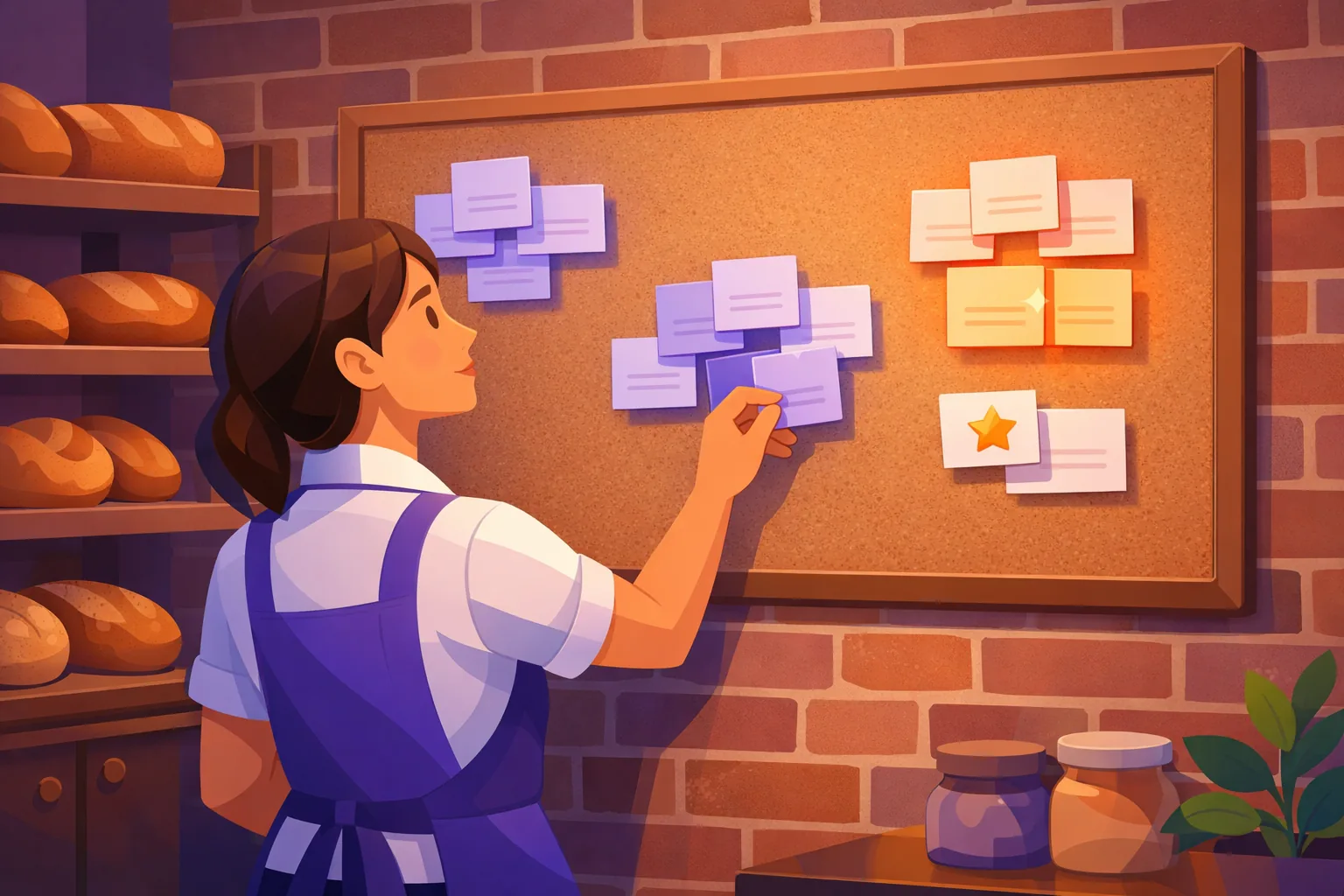
Catch the sequence at step one or two and the fix is usually one operational change. Catch it when the rating finally drops and you are also doing reputation repair, which is slower and harder. That earlier-warning idea is the core of review sentiment analysis, and it is worth doing even if your rating has never looked better.
Want the words watched for you?
ReplyOnTheFly reads every review as it arrives, tracks which themes are rising or cooling, and emails you a reply ready to send.
Start freeHow to Track Sentiment Without Reading 400 Reviews
By hand, the method is a weekly batch read. Put your ten newest reviews next to ten from two months ago and ask one question: warmer or cooler? Note any "but" sentences and any detail named twice. Fifteen minutes, once a week, catches most slides at low volume.
Volume beats the manual method eventually. Past a few hundred reviews, or more than one location, nobody can hold the baseline in their head, and the comparison that matters (this month's tone against last quarter's) stops being something you can eyeball.
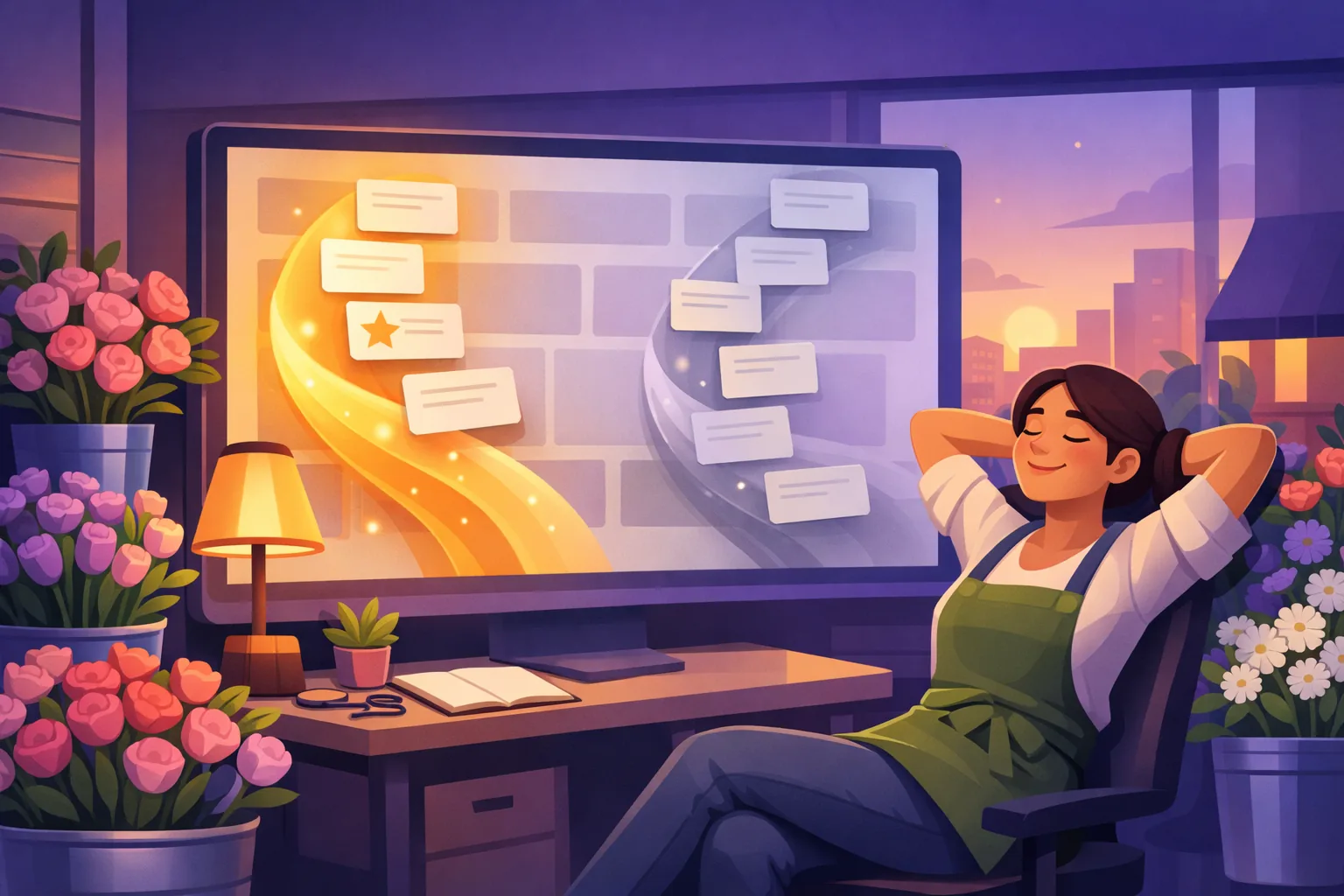
That is the point of Review Insights, which is included free with every ReplyOnTheFly account. It reads every review, groups "took forever," "slow," and "still waiting" into one theme, and shows whether that theme is rising or fading, with the actual reviews attached so you can judge the trend yourself instead of trusting a score.
One number worth knowing alongside all this: how far your rating can actually move. The free review calculator shows exactly how many five-star reviews it takes to shift your average, which makes the lag concrete. If it takes 40 new five-stars to climb a tenth of a point, it takes a similar pile of quiet disappointment to drag it down, and the words will have told you months earlier.
The Number Is the Scoreboard. The Words Are the Game.
Star rating vs customer sentiment is not a contest with a winner. You need the rating to get considered and the sentiment to get chosen, and they answer different questions: "how has it gone historically" versus "how is it going right now."
The practical rule: read your rating monthly and your words weekly. When they disagree, believe the words, because they are early and the number is late. Fix the theme they point at, reply publicly so the next reader sees it, and let the average catch up to the story instead of the other way around.
For the wider set of numbers worth watching around this one, our guide to Google review analytics covers what to track and how often.
Frequently Asked Questions
What is the difference between star rating and customer sentiment?
Star rating is the average of every score a business has ever received, compressed into one number. Sentiment is what the words inside those reviews actually say: whether customers sound delighted, satisfied, or quietly disappointed. The two can disagree for months, because a customer who feels let down often still leaves four stars while the text tells the real story.
Can a business have a high star rating and unhappy customers?
Yes, and it is common. A lifetime average is built from years of history, so a recent slide barely dents it. A business at 4.6 can spend months collecting lukewarm four-star reviews full of hedges like "still decent" and "used to be better" while the headline number stays put. The words cool first, the stars follow later.
Do customers read reviews or just look at the star rating?
The rating gets you considered; the words get you chosen. Most people use the star average as a filter, then read a handful of recent reviews before deciding. If those recent reviews sound flat or mention the same complaint twice, many readers walk even though the number looked fine. AI assistants like ChatGPT do a version of the same thing, drawing on the text of reviews rather than the average alone.
How do I measure customer sentiment in my reviews?
At low volume, read your newest ten reviews in one sitting and ask one question: does this batch sound warmer or cooler than the ten before it? Look for hedged praise, "but" sentences, and repeated specifics. Past a few hundred reviews or multiple locations, use a tool that groups reviews into themes and shows whether each theme is rising or fading, with the actual reviews attached so you can verify the trend yourself.
Why is a four-star review sometimes a warning sign?
Because polite customers round up. A four-star review whose text says "the wait was long but the food saved it" is a complaint wearing a compliment's score. One of those is an off day. Three in a month naming the same thing is a problem announcing itself while your average is still going up. Read the words on your four-star reviews; that is where slippage shows first.
What should I do when my reviews sound worse than my rating?
Treat the words as the truth and the number as the lag. Find the specific complaint that keeps repeating, fix that one thing, and reply publicly to the reviews that mention it so the next reader sees you acted. Then watch whether the theme fades over the following weeks. If you wait for the star average to confirm the problem, you will have lost months.
Hear the story behind your number
ReplyOnTheFly reads every new review, tracks which themes are rising or cooling, and emails you a reply drafted in your voice. One tap to approve. Free forever, no login needed.
Start Free - No Credit Card Required- Unlimited AI drafts
- 5 free one-click posts/month
- Works from your email inbox
Written by ReplyOnTheFly Team
Content Team
Free toolNo signup
Reach your target rating
Work out exactly how many 5-star reviews it takes to move your average, and how long.
Run the numbersOr create a free account to automate replies
Related Articles

Google Review Analytics: Track Metrics That Drive Business Growth (2026)
Learn how to track and analyze Google review metrics to improve your reputation and revenue. Get actionable insights from review data to grow your business.

Review Sentiment Analysis: Spot a Problem Before It Spreads
Review sentiment analysis for small businesses, in plain English: the early warning signs in your Google reviews and how to act before customers drift.

How to Find Patterns in Hundreds of Customer Reviews
Once you have hundreds of reviews, the loudest one isn't the most common. Here's how to find patterns in customer reviews at scale, without reading every one.